Somerset Home for Temporarily Displaced Children

Jeffrey Fetzko, ACSW, LSW, CFRE
Vol. 8, No. 24, November 25, 2010
The Executive Director's News is published every two weeks, and is specifically written for the employees, board of trustees and friends of the Somerset Home.
This issue and past issues are available on our web site at /main/pages/employee_newsletter.htm.
Happy Thanksgiving

On Tuesday, we celebrated Thanksgiving with our kids, staff, volunteers and supporters at Brahma House. For the eighth year, volunteers prepared and served a delicious dinner for all to enjoy. Words can't describe our gratitude to these these wonderful volunteers.
Bridge House

The Bridge House Apartment program is gearing up for its grand opening on December 4th!
We are renting three apartments at the Brookside Gardens apartment complex in Somerville, NJ for youth graduating from our transitional living programs. We will also be renting the new Bridge House building to two young people. Moving day is next Saturday!
Please contact Kathy Coulahan if you have any household items to donate. We need kitchen and bath items. More about this exciting new program in the next issue.
Horizon Flu Shot Voucher

If you are a Horizon Blue Cross and Blue Shield subscriber through Somerset Home you may use the attached voucher for a free flu shot.
DCF Commissioner Blake to Visit Somerset Home Programs - Visit Update
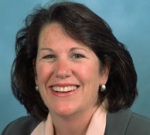
We are very pleased to have scheduled Dr. Allison Blake, Commissioner of the NJ Department of Children and Families scheduled to visit our Transitional Living Programs, meet some of our youth and discuss our future plans for Bridge House. Unfortunately, the Commissioner had to cancel her November 16th visit having been called to a meeting with the Governor. We have rescheduled for December 6th.
Annual Holiday Trip Planned

The tree arrived at Rockefeller Center on November 11th and the sights and sounds of the holidays are rapidly approaching. The annual holiday trip is planned for Tuesday, December 7th and will include a bus trip to New York City, to attend the Radio City Christmas Spectacular show, a visit to see the tree (in its upright position) at Rockefeller Plaza and then dinner at Applebees on 42nd Street.
N.J. towns sitting on housing funds

By Maya Rao - Inquirer Staff Writer - Philadelphia Inquirer - Posted on Sun, Nov. 14, 2010
Five days a week, Steve Dasher leaves his home in Northeast Philadelphia for a two-hour bus ride to his sales job at the Cherry Hill Car Wash on Route 70. He has shopped for apartments near the car wash, but Dasher said he would have to spend at least half his income - $10 an hour plus commissions - on rent to live there. Like many companies in Cherry Hill, Dasher's employer paid into the township's affordable-housing trust fund as a condition of receiving a building permit and certificate of occupancy. But for years, the wealthy suburb hasn't used any of the money to make more affordable housing available. The little spent recently from the account, which has more than $2 million, instead went toward administrative expenses, records show.
Across New Jersey, one of the least-affordable states in the nation, towns are sitting on a total of $263 million in affordable-housing money paid by fees on developers.
An Inquirer review of
state records identified more than 50 towns that, like Cherry Hill, have failed
since at least 2005 to spend money from their trust funds on affordable housing.
Some used money for administrative fees; others spent nothing at all.
Cherry Hill officials said that they had submitted spending plans to the court
that oversees their housing obligations, but that the plans hadn't been approved.
Nearby Gloucester Township rapidly amassed nearly $1 million in recent years,
but only this year did it commit to spending it. State leaders and housing
advocates worry that money from funds across the state is being spent too
slowly, even as those accounts have grown by $110 million in the last five
years.
"The fact that those dollars have been so slowly spent causes me great anxiety," Lori Grifa, commissioner of the state Department of Community Affairs, told an Assembly committee last week.
Builders, mayors, housing
advocates, and state officials have clashed for decades over how New Jersey's
566 towns should meet what the state Supreme Court has ruled is a constitutional
obligation to provide low- and moderate-income housing.
Gov. Christie wants to abolish the widely criticized Council on Affordable
Housing, which enforces those obligations, and several proposals in the Legislature
would revamp the rules. On Oct. 9, an appeals court threw out most of COAH's
rules and gave the state five months to draft new ones. State figures show
that production of affordable housing certified through COAH fell last year
to 709, the lowest level in at least a decade, though not all low-end housing
is reported to the state.
Grifa has suggested to lawmakers that some towns are reluctant to spend money in their trust funds due to uncertainty over the affordable-housing rules.
Some housing activists say towns just don't want to bring low-cost housing into their communities. Whatever the reason, Matthew Reilly of the Moorestown affordable-housing nonprofit MEND views the situation as a shame. "From the town's standpoint, it might make sense to wait, but does it make sense to wait for all the people who might need that housing?" asked Reilly, MEND's president. "No, and that's the tragedy in this situation. . . . People are sitting out there on MEND's waiting list and lots of other waiting lists around the state, and the housing is not being produced." Using money from Medford's housing trust fund and other sources, Reilly's organization recently opened a 36-unit senior-housing development that had drawn five applicants for every opening. One of the successful ones was 85-year-old Doris Heintz. A recent widow, Heintz said that she wanted to stay where she had raised a family, but that it had become too expensive. "I just think I'm very lucky to be in a place like this," Heintz said of her new home. Single mother Rachel Teehan, 23, had a harder time finding affordable housing this year. She scoured the Mercer County suburbs, but on her salary of almost $13 an hour as a customer-service rep, Teehan could afford to live only in Trenton with her two sons. "From what I heard," she said, "the waiting list was just really long, and what I needed was something fast." As the push to change New Jersey's affordable-housing system has intensified this year, housing advocates have pressed the need for low-cost homes near hubs for jobs and mass transit. They note that people who can afford to live near their jobs save time and money on commutes. People, in other words, like Dasher, a 42-year-old single man who earned $32,000 last year. He estimates he would have to spend half his pay on rent if he moved to Cherry Hill, where he would like to live so he could knock his two-hour commute each way down to a walk of a couple of minutes. Housing experts say people should not spend more than one-third of their income on rent, a threshold that Dasher meets by splitting the cost with a housemate in the Juniata Park section of Philadelphia.
Kevin Walsh of the Fair Share Housing Center in New Jersey accused Cherry Hill of having a long history of dragging its feet to provide affordable housing, saying the township could take advantage of the economic downturn by buying market-rate units and converting them to affordable ones. Cherry Hill officials said they had submitted spending plans for the housing fund, most recently in 2009, but hadn't received the required court approval. Township spokesman Dan Keashen attributed delays to the special court master who oversees the affordable-housing plans and to the Fair Share Housing Center, which has brought legal challenges. The special master is paid administrative fees from the housing trust fund, and it was billed $116,242 from 2007 to early 2010, according to court records. Just eight new affordable units have been certified by the state in the last five years in Cherry Hill, at the Chanticleer complex and Park Place at Garden State Park. The township said that it has about 1,100 such units in all, but that there were many more affordable homes that didn't fall under COAH. The COAH process "is not anything that would win a horse race," said Keashen. "It's highly bureaucratic . . . and it is an absolute failure in making its objectives a reality, which is to create affordable housing." Some projects have stalled in the economic downturn, but Keashen said the town was working with the Catholic Diocese of Camden on a 74-unit affordable development.
Some of the largest affordable-housing funds can be found in North Jersey. The Ingerman Group in Cherry Hill is finalizing an affordable-housing development with Monroe Township in Middlesex County, which is sitting on $12 million. Brad Ingerman, the company's founder, said he had tried to find towns that "have those big, healthy trust funds, and usually they have those big, healthy trust funds because they haven't built much affordable housing." Even with the millions of trust-fund dollars, Ingerman said, other components are needed to pull a project together. He lamented that fewer low-income tax credits - a common source of affordable-housing financing - were available through the state. Ingerman said that one South Jersey town was ready to part with some of its trust-fund money for a proposed Ingerman Group development, but that a state housing fund paid through real estate transfer taxes had dwindled and couldn't come through with its share of the financing.
A bill passed last week by the Assembly's Housing and Local Government Committee would allow developers of market-rate housing to pay a fee into a local housing trust fund instead of setting aside some units at affordable rates, as required under the current system. The state could take the money from those funds if they have gone unspent for four years. But housing advocates, including Walsh, told the committee that the legislation wouldn't do enough to ensure that the housing funds would be spent. They fear it would be more of the same: towns collecting fees; money sitting in the bank.
As always, thank you all for your continued hard work on behalf of our youth.

