Somerset Home for Temporarily Displaced Children

Jeffrey Fetzko, ACSW, LSW, CFRE
Vol. 8, No. 23, November 11, 2010
The Executive Director's News is published every two weeks, and is specifically written for the employees, board of trustees and friends of the Somerset Home.
This issue and past issues are available on our web site at /main/pages/employee_newsletter.htm.
12th Annual Run for Runaways 5k

Thank you all for supporting our 12th Annual Run for Runaways. We had a very successful event with 241 runners and beautiful weather.
Special thanks to our volunteers and race coordinator Kathy Doolin and I hope to see you next year, November 5th for the 13th Annual Run for Runaways.
Somerset Home 2009 Annual Report
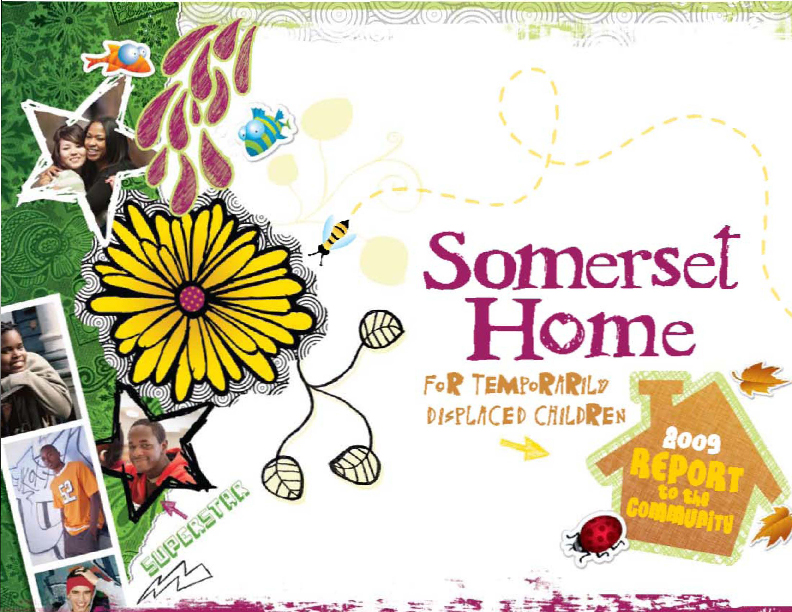
Our 2009 annual report is now available. Click on the photo above or pick up a copy at the office to view our last year's accomplishments.
Spooky Pumpkins at Brahma

The kids at Brahma House had a great time creatively carving pumpkins and then lined the driveway with these scary faces.
DCF Commissioner Blake to Visit Somerset Home Programs

We are very pleased to have scheduled Dr. Allison Blake, Commissioner of the NJ Department of Children and Families for a visit next week on November 16th. Dr. Blake will visit our Transitional Living Programs, meet some of our youth and discuss our future plans for Bridge House.
Beat the Flu!
$5 flu shots on November 13th

The Somerset County Health Department invites residents to “drive on through and prevent the flu” at a drive-through flu-shot clinic on Saturday, Nov. 13, from 9 a.m. to noon at the South County Public Works Facility, located at 410 Roycefield Road in Hillsborough.
Bridge House Supportive Housing Program

What is Supportive Housing?
Supportive housing is a successful, cost-effective combination of affordable housing with services that helps people live more stable, productive lives.
Some Facts about Supportive Housing and Homelessness:
No one wants to be homeless - Supportive housing offers people a way out of a situation that no one wants to be in: having no stable place to live. In supportive housing, people can live with stability, autonomy, and dignity.
Supportive housing helps people live more stable and productive lives - Supportive housing is proven to help people who are persistently homeless find stability in a home of their own. Supportive housing's combination of permanent, affordable housing and available services works well for people who face the most complex challenges-people who are not only homeless, but who also have very low incomes and serious, persistent issues that may include substance use, mental illness, and HIV/AIDS.
Supportive housing is permanent housing - People who live in supportive housing sign leases and pay rent, just like their neighbors. Supportive housing and shelters aren't the same thing, but they complement each other. Shelters work well for what they're designed for-emergencies and short-term situations, not as long-term housing.
Supportive housing is cost-effective - It costs essentially the same amount of money to house someone in stable, supportive housing as it does to keep that person homeless and stuck in the revolving door of high-cost crisis care and emergency housing. Cost studies (CSH) prove that we can either waste money keeping people homeless or spend those dollars on a long-term solution that produces positive results for people and their communities.
Supportive housing unit is defined by the following elements:
The unit is available to, and intended for, a person or family whose head of household is homeless, or at-risk of homelessness, and has multiple barriers to employment and housing stability, which might include mental illness, chemical dependency, and/or other disabling or chronic health conditions;
The tenant household ideally pays no more than 30% household income towards rent and utilities, and never pays more than 50% of income toward such housing expenses;
The tenant household has a lease (or similar form of occupancy agreement) with no limits on length of tenancy, as long as the terms and conditions of the lease or agreement are met;
The unit’s operations are managed through an effective partnership among representatives of the project owner and/or sponsor, the property management agent, the supportive services providers, the relevant public agencies, and the tenants;
All members of the tenant household have easy, facilitated access to a flexible and comprehensive array of supportive services designed to assist the tenants to achieve and sustain housing stability.
Service providers proactively seek to engage tenants in on-site and community-based supportive services, but participation in such supportive services is not a condition of ongoing tenancy.
Service and property management strategies include effective, coordinated approaches for addressing issues resulting from substance use, relapse, and mental health crises, with a focus on fostering housing stability.
A Range of Housing Models - While there may not be a single perfect model, there are a number of preferred housing models for supportive housing. The housing setting will vary dramatically and be based on a range of factors including the tenant’s preference, the type of housing stock available, and the norms and history of a local community’s real estate market, and might include:
Apartment or single-room occupancy (SRO) buildings, townhouses, or single-family homes that exclusively house formerly homeless individuals and/or families; Apartment or SRO buildings, or townhouses that mix special-needs housing with general affordable housing; Rent-subsidized apartments leased in the open market; and Long-term set-asides of units within privately owned buildings.
As always, thank you all for your continued hard work on behalf of our youth.

