Somerset Home for Temporarily Displaced Children

Jeffrey Fetzko, ACSW, LSW, CFRE
Vol. 7, No. 21, October 15, 2009
The Executive Director's News is published every two weeks, and is specifically written for the employees, board of trustees and friends of the Somerset Home.
This issue and past issues are available on our web site at /main/pages/employee_newsletter.htm.
Passages Picnic Area

The Passages backyard picnic area project continues. The fence and landscaping have been completed resulting in a private and pleasant picnic area.
What is Child Traumatic Stress?
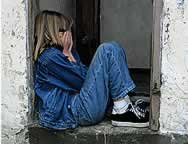
Many of the youth in our care are diagnosed with PTSD or post-traumatic stress disorder. A new diagnosis, C-PTSD or complex post-traumatic stress disorder is expected to appear in the next version of the Diagnostic and Statistical Manual of Mental Disorders (DSM 5).
Child Traumatic Stress refers to the physical and emotional responses of a child to events that threaten the life or physical integrity of the child, or someone critically important to the child (such as a parent or sibling). Traumatic events overwhelm a child's capacity to cope and elicit feelings of terror, powerlessness, and out of control physiological arousal. A child's response to a traumatic event may have a profound effect on his or her perception of self, the world, and the future.
Traumatic events may effect a child's: 1) ability to trust others, 2) sense of personal safety, 3) effectiveness in navigating life changes.
Types of Traumatic Stress
Acute trauma is a single traumatic event that is limited in time.
Chronic trauma refers to the experience of multiple traumatic events.
Complex trauma* describes both exposure to chronic trauma, usually caused by adults entrusted with the child's care, and the impact of such exposure on the child.
*Complex post-traumatic stress disorder (C-PTSD) is a psychological injury that results from protracted exposure to prolonged social and/or interpersonal trauma with lack or loss of control, disempowerment, and in the context of either captivity or entrapment, i.e. the lack of a viable escape route for the victim. C-PTSD is distinct from, but similar to, post-traumatic stress disorder (PTSD). Though mainstream journals have published papers on C-PTSD, the category is not formally recognized in diagnostic systems such as DSM or ICD. A differentiation between the diagnostic category of C-PTSD and that of post-traumatic stress disorder (PTSD) has been suggested. C-PTSD better describes the pervasive negative impact of chronic repetitive trauma than does PTSD alone.
H1N1 Flu Update - Will you get the vaccine?
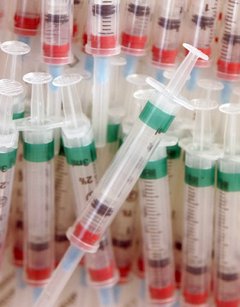
A Farliegh Dickenson Public Minds poll released last week shows that 3/4's of New Jerseyans are not worried about contracting the swine flu.
The poll reveals that 62 percent don't plan on getting the vaccine, 30 percent report they will and 9 percent are undecided.
One in five have gotten their seasonal flu shot but only half of those plan to go back for the second vaccine.
The indifference detected by the poll troubled Glennena Smith, associate professor at Farliegh Dickenson's School of Nursing and Allied Heath. "People need to remember that their health is other peoples health. ...it's about the health of those around them including their family and co-workers."
"I think people get the feeling it's not going to be a bad flu. But of those children who died, one-third had no underlying health problems. We cannot predict which child will get into trouble," said Meg Fisher, medical director of the Children's Hospital at Monmouth Medical Center in Neptune and a renowned pediatric infectious disease specialist.
Nationwide, children are the focus of this first wave of vaccinations because only the nasal spray is ready, and the U.S. Centers for Disease Control and Prevention says only healthy people between the ages of two and 49 may get it.
"Our guidance is we should hit children two to 18, and health care workers," said Tom Slater, spokesman for the NJ Department of Health and Senior Services.
"Our message to the general public is (that) this is the beginning of the process that will be ongoing through fall into the winter, and they should be on the look-out for where they can get'' the vaccine, he said.
The department established a hot-line dedicated to answering questions about the H1N1 flu, as the swine flu is known medically. "As we find out when communities will hold their clinics, we will be able to make that available," The number is (866) 321-9571.
Centers for Disease Control (flu.gov)
As always, thank you all for your continued hard work on behalf of our youth.

